
Confucius
Confucian traditionThinker
Examines ritual, virtue and social harmony as a philosophy of ordered ethical life rather than abstract metaphysics alone.
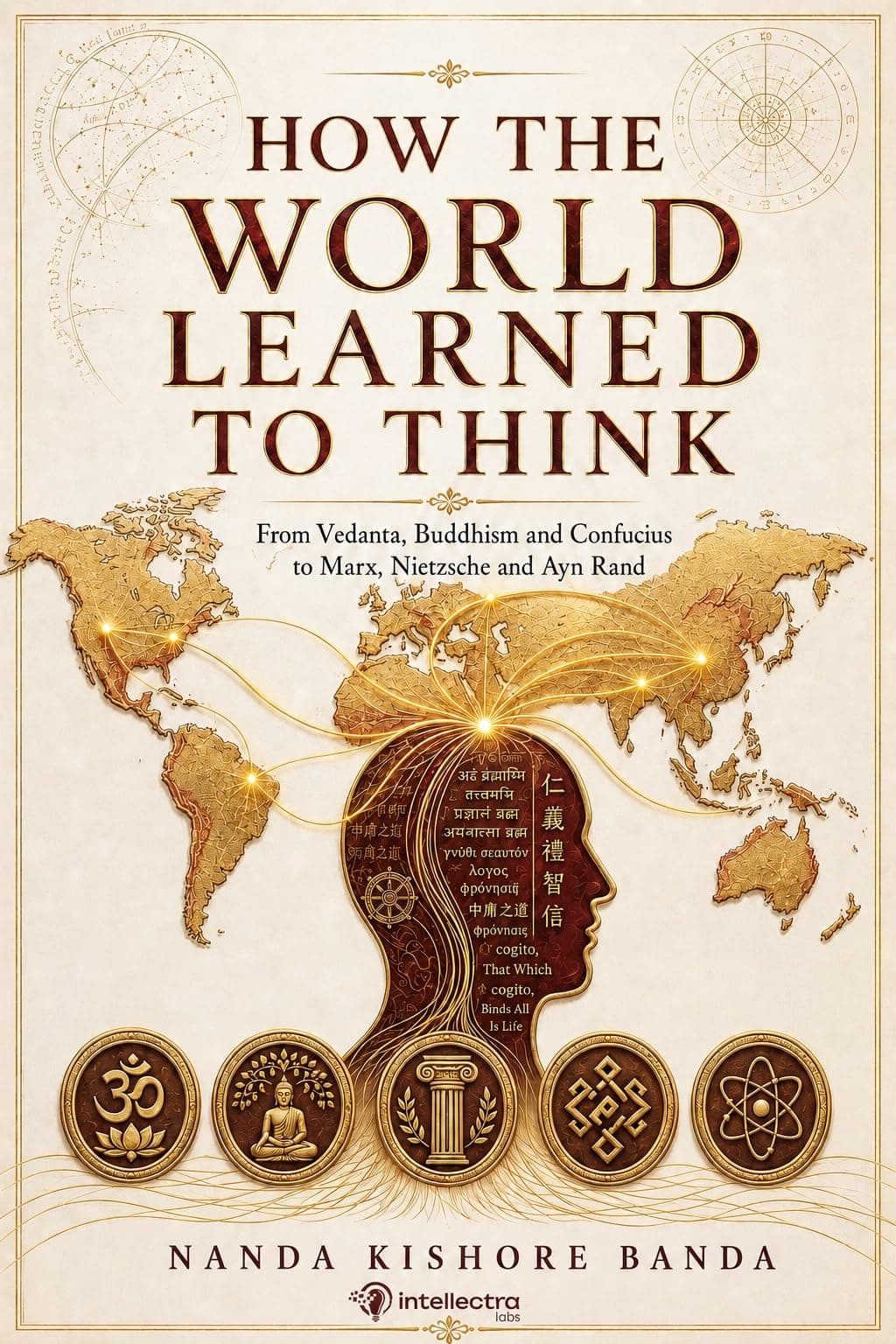
From Vedanta, Buddhism and Confucius to Marx, Nietzsche and Ayn Rand
Ideas shape societies long before most people recognise their influence. How the World Learned to Think travels across civilisations to examine Vedanta, Buddhism, Confucius, Karl Marx, Friedrich Nietzsche, Ayn Rand and the philosophies that changed how human beings understand truth, freedom, suffering and the self—without reducing Eastern or Western traditions to stereotypes.
Kindle: B0HHG8NQV9
Why do civilisations disagree so profoundly about truth, freedom, morality and the good life—and why do those disagreements still govern politics, culture and private conscience centuries later? How the World Learned to Think begins with that persistence: ideas are not decorative commentary on history; they are engines that shape how societies organise power, assign dignity and imagine what a human being is.
The book travels across traditions without treating philosophy as a Western monopoly or reducing Eastern thought to exotic contrast. Vedanta, Buddhism and Confucius appear alongside Marx, Nietzsche, Ayn Rand and other figures who taught millions how to think about suffering, obligation, selfhood and social order. The aim is conversation, not conquest—showing how different civilisations asked related questions with different vocabularies and consequences.
Readers encounter philosophy as lived inheritance rather than examination syllabus. What does it mean to seek liberation from desire, to assert the will to power, to ground morality in rational self-interest, or to dissolve the boundary between self and ultimate reality? Each tradition carries internal argument as well as external influence; the book respects both without forcing premature verdicts.
Comparative reading here serves clarity, not ranking. By placing Indic inquiry beside modern European and American moral architectures, the work helps readers see why certain debates feel permanent—because they are rooted in rival answers to enduring human problems. Stereotypes dissolve when traditions are allowed to speak in their own seriousness.
The tone remains accessible without becoming shallow. Technical terms appear when necessary and are explained in language a thoughtful general reader can use. The book assumes curiosity, not prior degrees; it rewards patience with a map of global philosophy that makes later reading—whether of primary texts or contemporary argument—more confident and less accidental.
In an age of fragmented feeds and borrowed opinions, recovering how the world learned to think is also a practical act. It helps readers recognise philosophical assumptions embedded in politics, business ethics, spiritual seeking and cultural conflict—and to argue, choose and live with greater awareness of the traditions speaking through them.
If you want one serious journey across the ideas that shaped humanity's moral imagination, this book offers a path that honours both Eastern depth and Western disruption—without pretending that either holds the only questions worth asking.
The book compares how civilisations answered enduring questions about truth, freedom, suffering and the good life—without treating any single tradition as the only serious voice.
Thinker
Examines ritual, virtue and social harmony as a philosophy of ordered ethical life rather than abstract metaphysics alone.
Thinker
Traces historical materialism and class analysis—the argument that economic structure shapes consciousness and political possibility.
Thinker
Explores the will to power, moral genealogy and the crisis of inherited values in modern self-understanding.
Thinker
Studies rational self-interest and individual achievement as a moral architecture for modern economic and political imagination.
Nanda Kishore Banda Author, enterprise strategist and founder of Intellectra Labs—writing on business, AI, Vedanta, Indian philosophy, history, society and cinema with clarity without simplification.
Continue reading within Indic Spiritual & Philosophical Library or explore connected titles across the libraries.
Vedanta for the Age of Artificial Intelligence, Anxiety and Algorithms
Artificial intelligence is learning to imitate human thought—but have human beings understood who is thinking? This modern introduction to Vedanta connects the Upanishads and Bhagavad Gita with anxiety, ambition, algorithms, identity and consciousness.

Idol Worship and the Intelligence of Form
If the divine is infinite, why approach it through an image? God Has a Form moves beyond easy accusations of superstition to examine murti worship as a sophisticated language of attention, symbolism, presence and sacred relationship.
Ten Mysteries Hidden in Indian Tradition: When Myth Becomes a Language
India's strangest sacred beings were never merely decorative fantasies. Through ten remarkable figures, Beyond Myth reveals how traditional forms encoded ideas about power, protection, consciousness, transformation and the boundaries between worlds.
Purchase on Amazon or explore more titles across the five libraries.