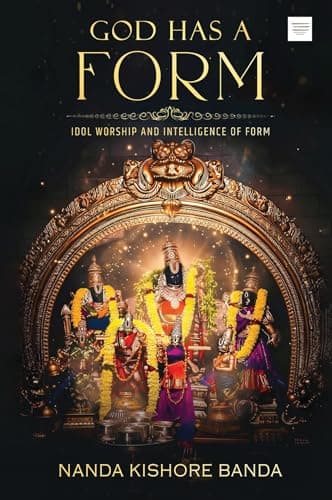
Why does Indic worship so often meet the divine through form—through image, murti, symbol and sacred architecture—when modern scepticism treats such practice as primitive belief? God Has a Form begins there, not to recruit readers to a doctrine, but to understand why form has endured as a serious spiritual language.
Sacred form concentrates attention, carries memory, enables devotion and makes abstract metaphysical claims inhabitable for ordinary seekers. The book examines how philosophy, ritual and aesthetics work together in traditions that do not separate knowing from relating to the sacred.
Readers interested in comparative religion, Indian philosophy and temple culture will find a treatment that respects belief while maintaining analytical clarity. It distinguishes critique from contempt, allowing difficult questions without reducing tradition to caricature or apology.
Contemporary debates often use idol worship as a proxy for broader cultural conflict. By clarifying what practitioners mean by form—and what they do not mean—the book helps readers engage disagreement with precision rather than inherited prejudice.
God Has a Form is not a polemic for one school alone. It is an invitation to see why form persists across centuries because it continues to mean something to communities—and why dismissing it often reveals more about modern assumptions than about the tradition under examination.
If you have ever wondered how image and devotion can coexist with philosophical depth, this book offers a patient, intellectually serious path into one of Indic spirituality’s most misunderstood practices.