Intellectra Labs
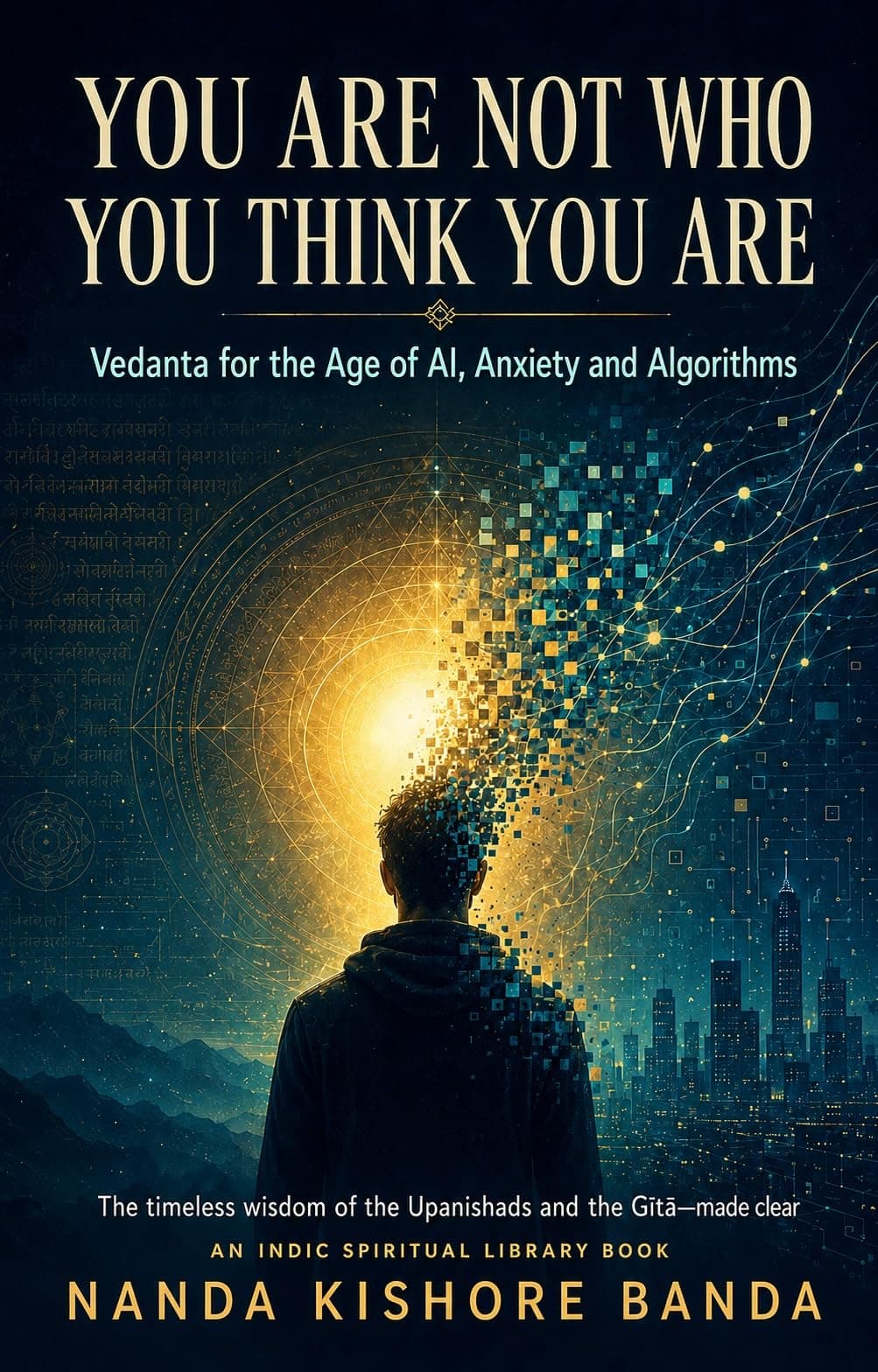
You Are Not Who You Think You Are by Nanda Kishore Banda — book cover
Indic Spiritual & Philosophical LibraryPublished

You Are Not Who You Think You Are

Vedanta for the Age of Artificial Intelligence, Anxiety and Algorithms

By Nanda Kishore Banda

We live in a world of extraordinary technology and persistent inner incompleteness. You Are Not Who You Think You Are brings Vedanta into direct conversation with artificial intelligence, social-media identity, ambition and modern anxiety. It asks whether we are the body, mind, memory and personal story—or the awareness in which all of them appear.

Book details

Publication date
31 August 2026
Language
English
Available formats
Kindle
ASIN

Kindle: B0HH8ZCWR4

Retailers
Amazon

The question at the heart of the book

You can achieve enough—status, income, recognition—yet still feel strangely unsettled. You Are Not Who You Think You Are begins in that modern ache and asks a question Vedanta has pursued for centuries: is the self you defend so fiercely the self you truly are?

The book introduces the Upanishads, the Bhagavad Gita and the broader Vedic inheritance in clear, conversational language. No prior Sanskrit training is assumed. The aim is not instant scholarship, but self-inquiry: why these texts endure as instruments for examining identity, suffering and freedom.

Are you the body that ages, the mind that worries, the thoughts that repeat, the memories you cling to, or the story you perform online? Vedanta proposes that each appears within awareness, yet none exhausts what you are. The book walks that distinction patiently, without demanding faith in place of examination.

Atman, Brahman, maya and moksha appear not as abstraction for its own sake, but as a map for serious questions. Advaita, Vishishtadvaita and Dvaita are presented so readers understand how Indian philosophy has argued about unity, relation and difference—without declaring a single winner by decree.

The inquiry meets contemporary life: anxiety, ambition, relationships, grief, mortality, social-media identity and artificial intelligence. If machines simulate language and memory, what does that reveal about consciousness—and about our habit of identifying with whatever appears most vivid?

This is not a call to abandon work or responsibility. Freedom here is a change in understanding, not withdrawal from the world. The book closes where the tradition often begins: with the possibility that you were never incomplete to begin with—and that recognising this can alter how you live.

Traditions and Concepts Explored

Vedanta meets contemporary life—algorithms, anxiety and identity—by asking whether the self you defend is the self you truly are.

Traditions

  • Vedanta
  • Advaita
  • Vishishtadvaita
  • Dvaita

Subjects

  • Upanishads
  • Bhagavad Gita
  • Vedas
  • Atman
  • Brahman
  • Maya
  • Moksha
  • Karma
  • Dharma
  • Consciousness
  • Artificial intelligence
  • Social-media identity
  • Anxiety
  • Ambition
  • Mortality
  • Self-knowledge

Philosophical ground covered

  • Self-knowledge versus constructed identity
  • Atman, Brahman, maya and moksha in accessible terms
  • Advaita, Vishishtadvaita and Dvaita compared
  • Consciousness distinguished from artificial intelligence
  • Anxiety, ambition and digital persona pressure
  • Upanishads and Bhagavad Gita for contemporary life

Who this Vedanta speaks to

  • Readers encountering Vedanta and Indian philosophy for the first time
  • Professionals questioning whether achievement alone can produce fulfilment
  • Those interested in consciousness, identity and artificial intelligence together
  • Students of the Upanishads, Bhagavad Gita and Vedantic commentarial traditions
  • Anyone navigating anxiety, grief or the pressure of digital self-presentation

What changes in how you see yourself

  • Grasp Vedanta's central questions and vocabulary without academic gatekeeping
  • Examine the difference between identity, thought and underlying awareness
  • Compare major Vedantic schools in language you can actually use
  • Apply philosophical insight to ambition, relationships and modern anxiety
  • Explore whether consciousness and computation describe the same phenomenon
  • Develop a practical sense of inner freedom without withdrawing from ordinary life

About the author

Nanda Kishore Banda Author, enterprise strategist and founder of Intellectra Labs—writing on business, AI, Vedanta, Indian philosophy, history, society and cinema with clarity without simplification.

Related books

Continue reading within Indic Spiritual & Philosophical Library or explore connected titles across the libraries.

God Has a Form by Nanda Kishore Banda — book cover
Available Now

God Has a Form

Idol Worship and the Intelligence of Form

If the divine is infinite, why approach it through an image? God Has a Form moves beyond easy accusations of superstition to examine murti worship as a sophisticated language of attention, symbolism, presence and sacred relationship.

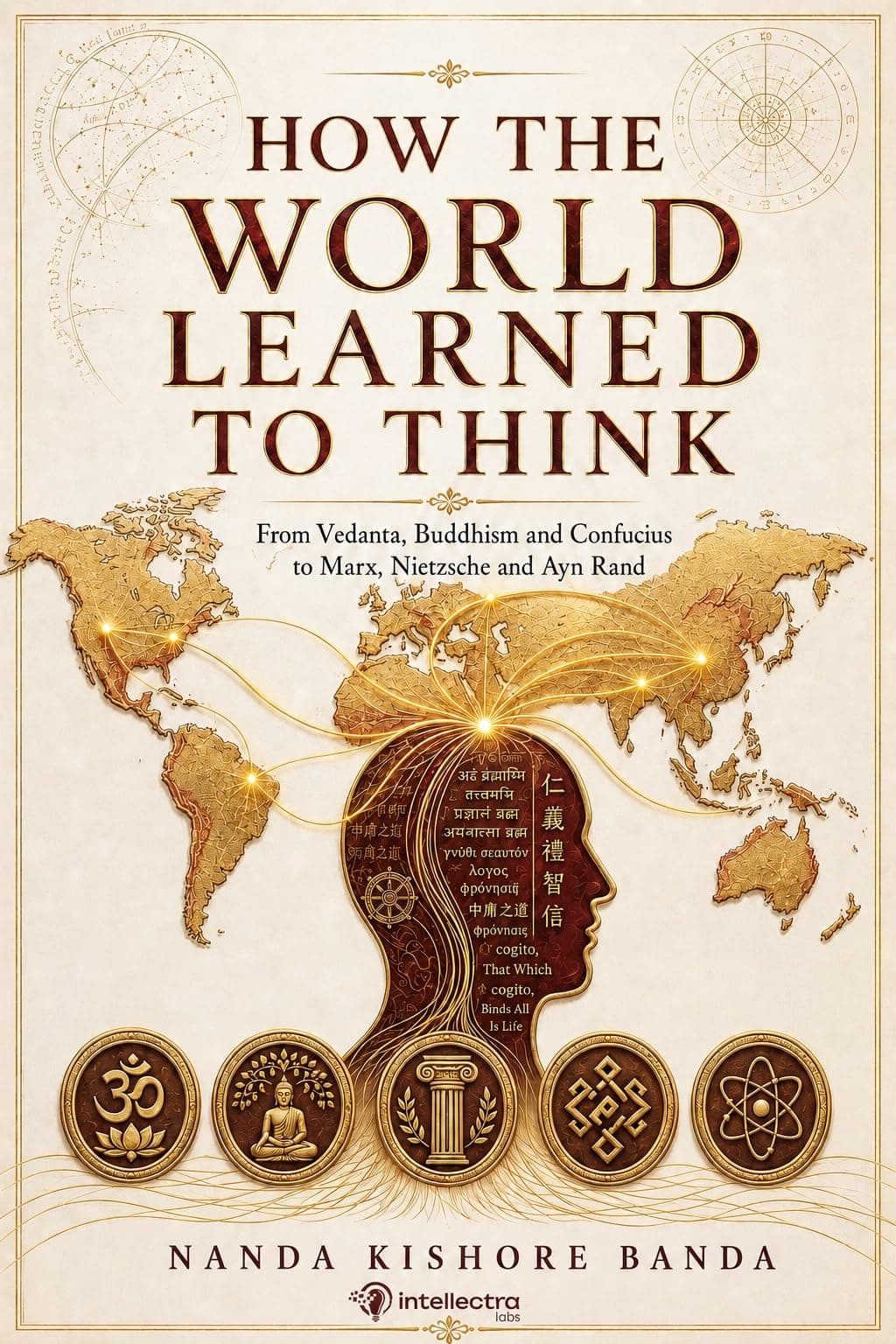
How the World Learned to Think by Nanda Kishore Banda — book cover
Available Now

How the World Learned to Think

From Vedanta, Buddhism and Confucius to Marx, Nietzsche and Ayn Rand

Civilisations did not inherit one answer to truth, freedom, morality or the good life. This accessible journey connects Vedanta, Buddhism and Confucius with Marx, Nietzsche, Ayn Rand and other traditions that taught humanity how to think.

Beyond Myth by Nanda Kishore Banda — book cover
Available Now

Beyond Myth

Ten Mysteries Hidden in Indian Tradition: When Myth Becomes a Language

India's strangest sacred beings were never merely decorative fantasies. Through ten remarkable figures, Beyond Myth reveals how traditional forms encoded ideas about power, protection, consciousness, transformation and the boundaries between worlds.

Continue with this book

Purchase on Amazon or explore more titles across the five libraries.