
Guru Dutt
Hindi cinemaDirector
Explores how shadow, song and interior grief made melancholy a mainstream cinematic language rather than an art-house exception.
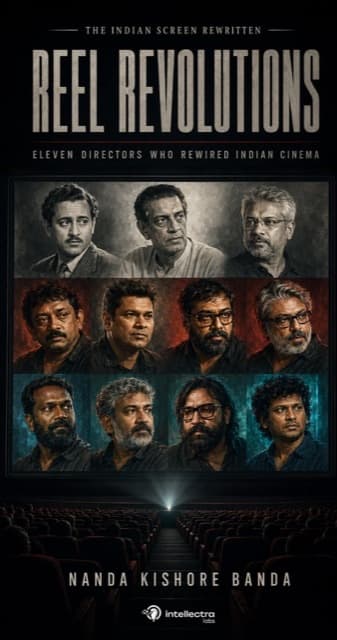
Eleven Directors Who Rewired Indian Cinema
The Indian Screen Rewritten
From Guru Dutt's melancholy interiors and Satyajit Ray's humanist realism to Mani Ratnam's polished modernity, Ram Gopal Varma's genre disruption and S. S. Rajamouli's mythic spectacle, Reel Revolutions studies eleven directors as architects of change. It asks how image, sound, performance, technology, violence, realism and regional texture were reinvented across Indian cinema history.
Kindle: B0H1LHL9F4
Indian cinema is often remembered as a list of hits. Reel Revolutions asks a harder question: how did particular directors change what audiences could see, hear and feel on screen—and what can we learn by watching through a technician’s eye?
Eleven careers anchor the book across eras and industries: Guru Dutt, Satyajit Ray, Mani Ratnam, Ram Gopal Varma, Shankar, Sanjay Leela Bhansali, Anurag Kashyap, Vetrimaaran, S. S. Rajamouli, Sandeep Reddy Vanga and Lokesh Kanagaraj. Each chapter treats direction as craft—camera, light, sound, editing, staging, spectacle, realism, regional texture and national scale.
Revolutions in Indian film were rarely solitary inventions. Cinematographers, editors, sound designers and art directors translated ambition into form. Reel Revolutions traces those collaborations so readers see how language changes when craft changes.
Landmark sequences appear not as trivia but evidence. How does a frame hold moral pressure? When does handheld movement create intimacy or chaos? Why does a long take feel authoritative in one context and indulgent in another? Film language is learned—and directors who change it change what stories can be told.
Cross-pollination between regional cinemas and mainstream industry runs throughout. Ray’s humanist precision, RGV’s digital restlessness, Mani Ratnam’s polished modernity, Rajamouli’s mythic scale, Vetrimaaran’s grounded realism and Lokesh Kanagaraj’s kinetic staging speak to one another even when goals diverge.
For filmmakers, critics and serious cinephiles, this is Indian cinema as evolving craft—not fan worship, but attentive reading of eleven careers that rewired form and continue to shape what the screen can mean.
Each chapter reads direction as craft—how camera, sound, editing and staging changed what Indian stories could show and mean.
Director
Explores how shadow, song and interior grief made melancholy a mainstream cinematic language rather than an art-house exception.
Director
Examines humanist precision and observational realism—the craft choices that anchored parallel cinema to everyday moral texture.
Director
Traces polished modernity that fused music, design and urban aspiration into a commercially influential visual grammar.
Director
Studies digital restlessness and genre disruption—how thrillers, gangster films and camera mobility rewired pace and violence on screen.
Director
Analyses spectacle engineering that merged VFX ambition, social scale and mass-market emotion into a new craft problem.
Director
Reads operatic frame design and heightened emotion—cinema treated as baroque visual theatre rather than naturalism alone.
Director
Follows indie intensity and handheld immediacy that brought mofussil angst and moral ambiguity into national conversation.
Director
Maps grounded realism that ties caste, labour, landscape and narrative integrity in contemporary Tamil storytelling.
Director
Explores mythic scale and choreographed wonder—the craft of pan-Indian event cinema and national audience formation.
Director
Examines provocative psychological intensity that pushed star-led narrative form into darker moral and formal territory.
Director
Studies kinetic staging and franchise architecture that refreshed Tamil action grammar for wider contemporary audiences.
Nanda Kishore Banda Author, enterprise strategist and founder of Intellectra Labs—writing on business, AI, Vedanta, Indian philosophy, history, society and cinema with clarity without simplification.
Continue reading within The Indian Screen Rewritten or explore connected titles across the libraries.
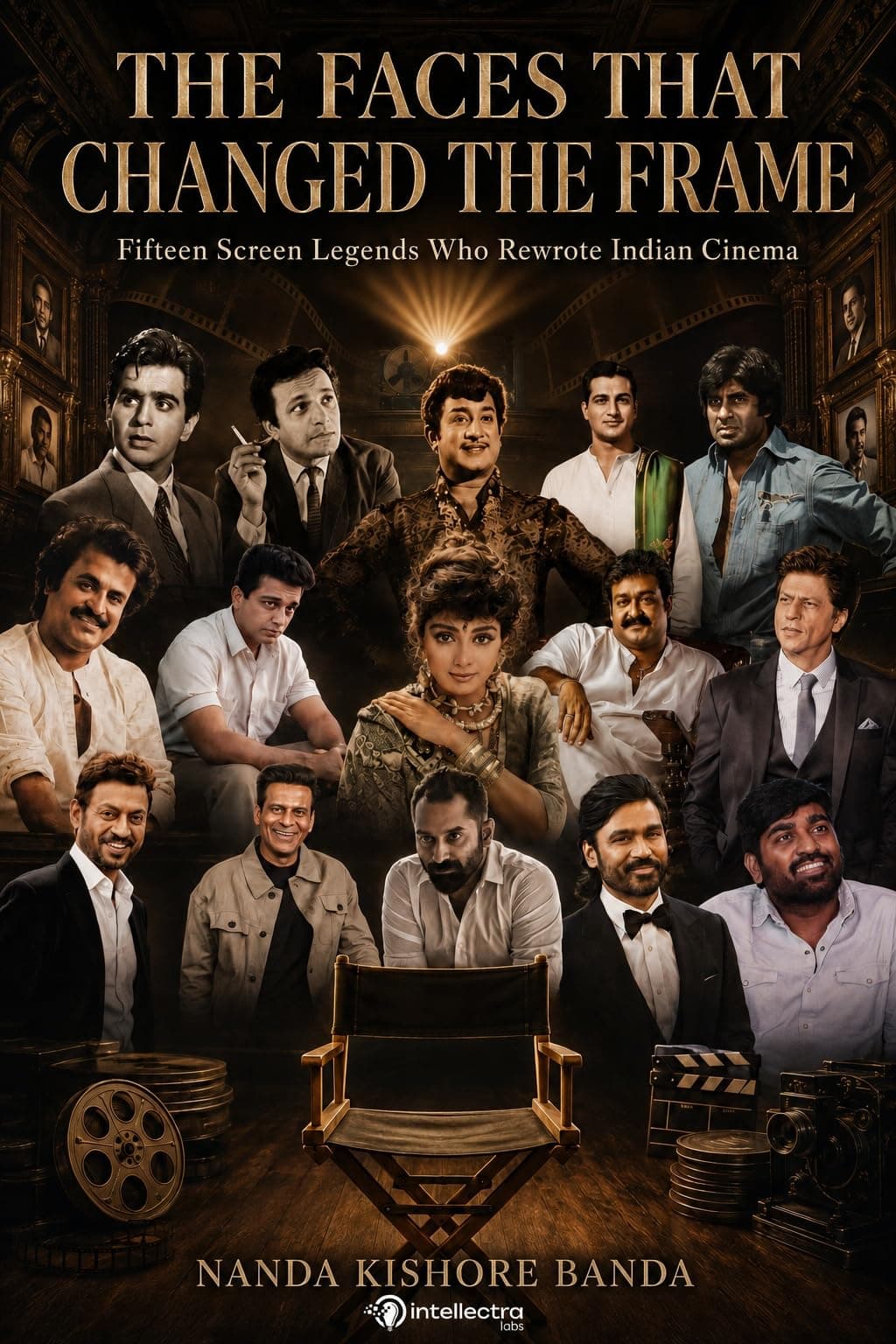
Fifteen Screen Legends Who Rewrote Indian Cinema
Some actors deliver great performances; a rarer few change what screen acting itself can be. This book examines fifteen legends whose faces, bodies, silences and choices rewrote the emotional grammar of Indian cinema.
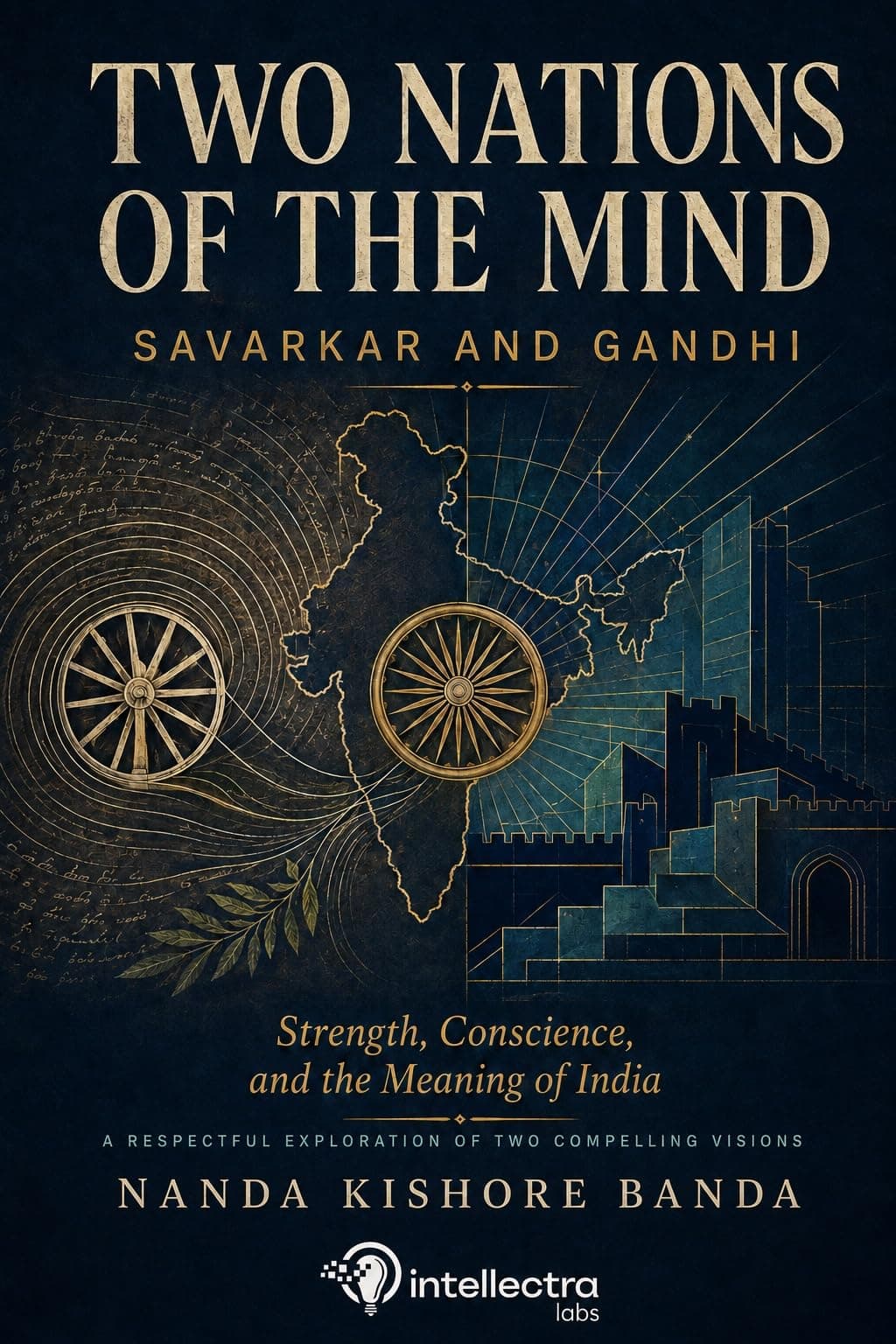
Savarkar and Gandhi — Strength, Conscience, and the Meaning of India
Savarkar and Gandhi imagined strength, freedom and India through radically different moral worlds. This balanced intellectual confrontation examines two compelling visions without reducing either thinker to a slogan, saint or villain.

The Khasi Woman Who Turned Water into Resistance
History remembers armies and treaties more readily than the woman who turned an ordinary act into resistance. Set in the Khasi Hills, this historical novel recovers Ka Phan Nonglait's courage from the margins of colonial memory.
Purchase on Amazon or explore more titles across the five libraries.