
Vinayak Damodar Savarkar
Historical Figure
Examines strength, civilisational confidence and Hindutva as a language for national survival under perceived existential threat.
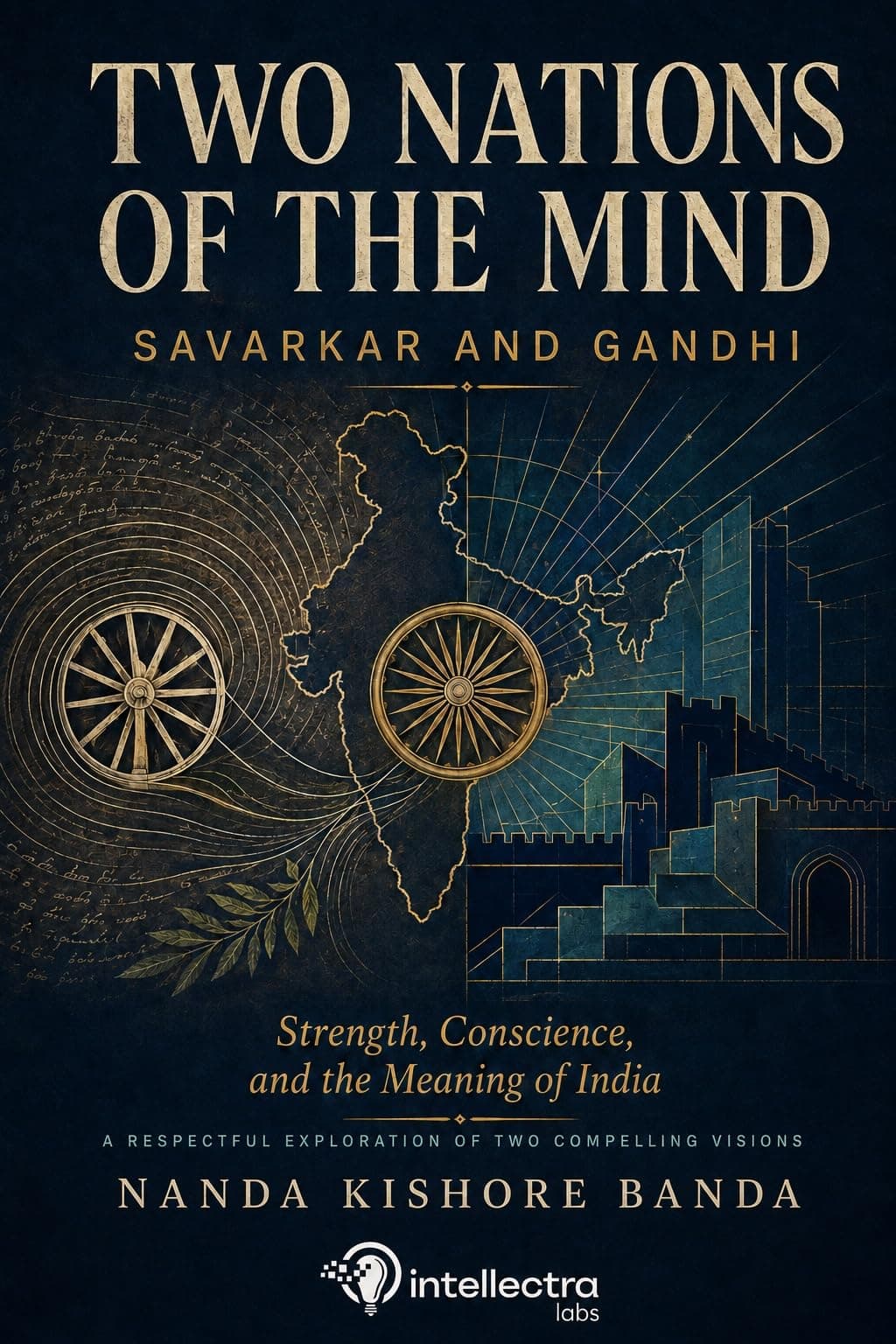
Savarkar and Gandhi — Strength, Conscience, and the Meaning of India
The Arguments That Made India
Vinayak Damodar Savarkar saw national survival through strength, cohesion and civilisational confidence. Mohandas Karamchand Gandhi placed conscience, nonviolence and moral discipline at the centre of politics. Two Nations of the Mind examines Savarkar and Gandhi as serious rival thinkers whose unfinished argument over Hindutva, nationalism and freedom continues to shape India's understanding of nationhood, courage and moral authority.
Kindle: B0HGS4N1GQ
India’s freedom struggle was fought on battlefields and in minds. Two Nations of the Mind places Vinayak Damodar Savarkar and Mohandas Karamchand Gandhi side by side—not as cartoon opposites, but as rival moral universes that shaped how millions imagined nationhood, courage, conscience and the meaning of strength.
Structured as intellectual biography rather than hagiography or indictment, the book traces formative experience, philosophical commitment and public choice. It examines the languages each man used to persuade others that his path was necessary—and why those languages still echo in contemporary debate.
Readers encounter moral psychology alongside political history: how fear is named, when conscience becomes strategy, and how two visions of India—often reduced to slogans—emerged from deeply personal understandings of duty and survival.
Part of The Arguments That Made India series, the work assumes that understanding Savarkar and Gandhi together illuminates present disputes about violence, legitimacy, identity and freedom more clearly than treating either figure in isolation.
The book does not recruit readers to a camp. It restores depth to a conversation that still shapes political imagination—showing how two nations of the mind were argued into being long before they were fought over on the ground.
If you want to move beyond inherited caricatures of India’s founding arguments, this is where the debate becomes readable, rigorous and uncomfortably relevant.
The book places two rival thinkers side by side as moral universes—not as slogans—to show how competing visions of India were argued into being.
Historical Figure
Examines strength, civilisational confidence and Hindutva as a language for national survival under perceived existential threat.
Historical Figure
Traces conscience, nonviolence and moral discipline as the centre of political legitimacy and mass mobilisation.
Nanda Kishore Banda Author, enterprise strategist and founder of Intellectra Labs—writing on business, AI, Vedanta, Indian philosophy, history, society and cinema with clarity without simplification.
Continue reading within India's Unfinished Debates or explore connected titles across the libraries.
Caste, Gender, Dharma—and the Battle Over India's Most Controversial Text
Few Indian texts are condemned, defended and quoted as fiercely as the Manusmriti. This evidence-led examination separates text from mythology, history from polemic and inherited law from the modern constitutional order.
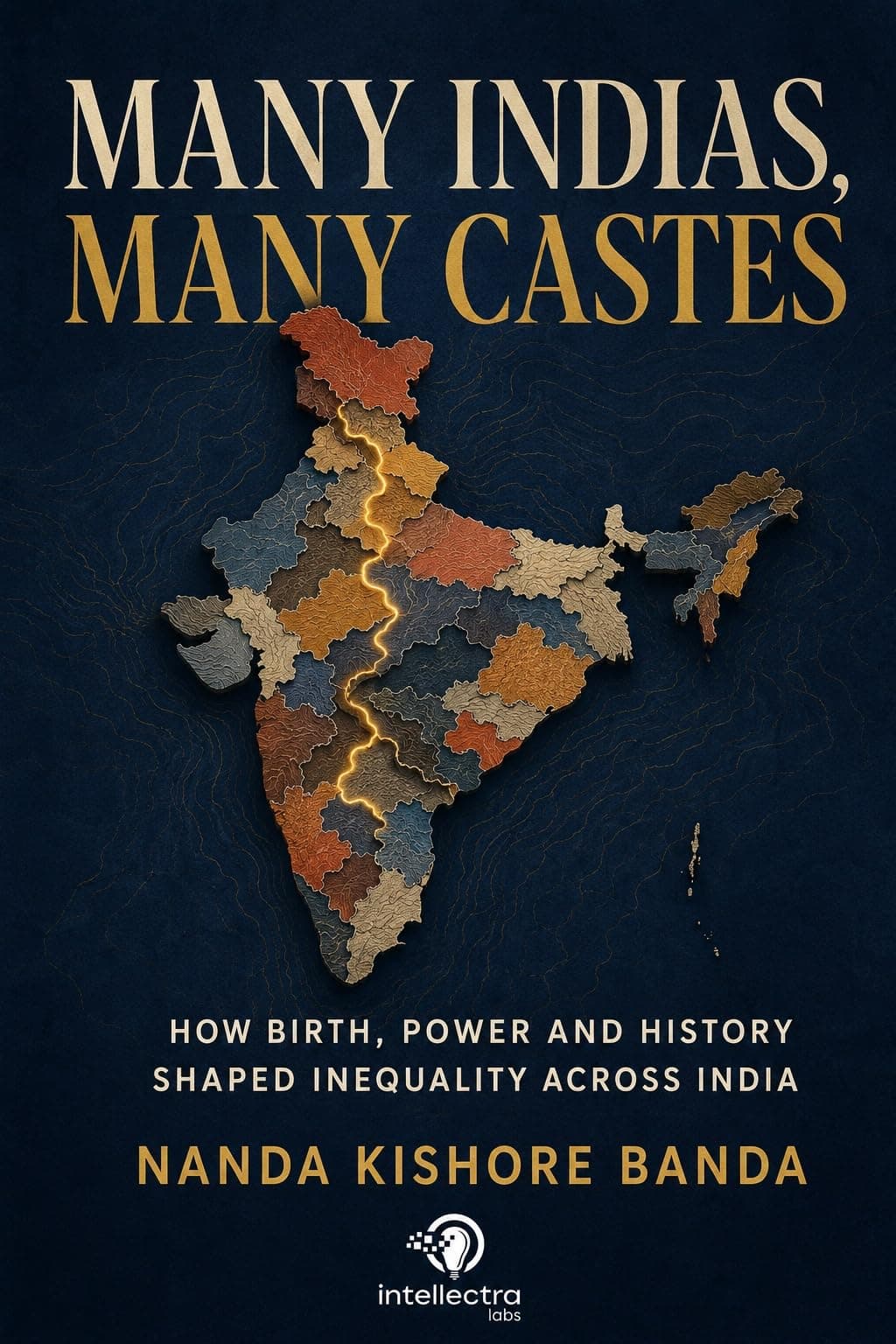
How Birth, Power and History Shaped Inequality Across India
India does not have one caste system repeated everywhere. Many Indias, Many Castes traces how region, land, politics, religion, conversion, gender and local history produced different structures of hierarchy—and different struggles for dignity.
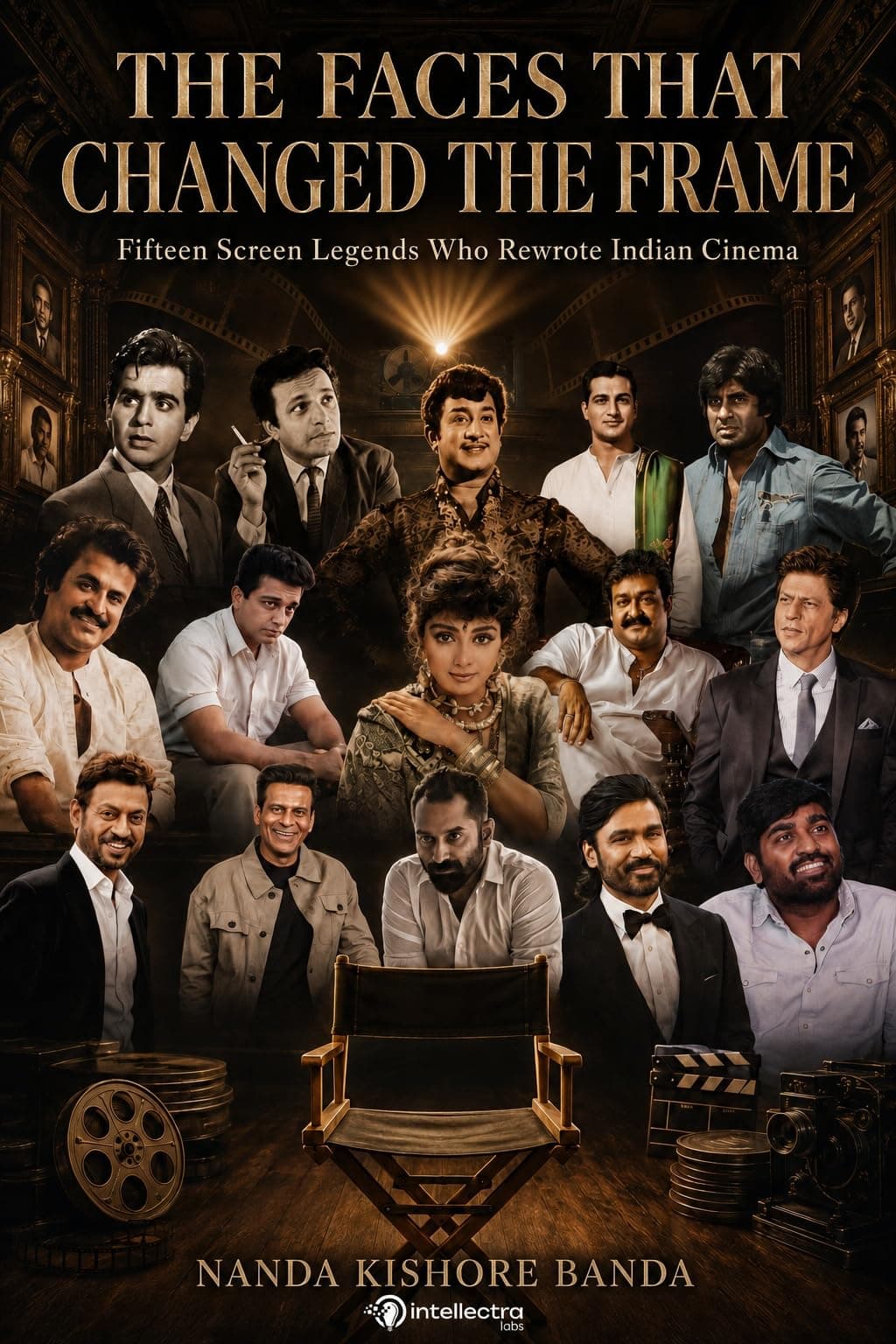
Fifteen Screen Legends Who Rewrote Indian Cinema
Some actors deliver great performances; a rarer few change what screen acting itself can be. This book examines fifteen legends whose faces, bodies, silences and choices rewrote the emotional grammar of Indian cinema.
Purchase on Amazon or explore more titles across the five libraries.