
Dilip Kumar
Hindi cinemaActor
Traces method-like emotional depth that taught Hindi audiences to read silence, restraint and moral conflict as performance.

Fifteen Screen Legends Who Rewrote Indian Cinema
The Indian Screen Rewritten
Cinema changes when audiences learn to see differently. The Faces That Changed the Frame explores fifteen performers—from Dilip Kumar and Sivaji Ganesan to Sridevi, Amitabh Bachchan and Kamal Haasan—who expanded stardom and screen acting across Indian languages and eras. Rather than ceremonial biography, it examines the craft, cultural force and screen presence through which these artists rewrote Indian cinema.
Kindle: B0HHHHJHSQ
Indian cinema is remembered through its stars long before its craft—and yet stardom itself is a kind of craft. The Faces That Changed the Frame asks a sharper question: which performers did not merely succeed within existing rules, but changed what audiences could feel when a face held the screen, when silence replaced dialogue, when the body carried moral weight the script never named?
Fifteen legends anchor the book across languages, eras and industries. Rather than ceremonial biography, each chapter examines screen presence as invention—how a performer altered emotional grammar, expanded the possibilities of stardom and taught audiences to see differently. The focus is not gossip but consequence: what changed in Indian cinema because these artists existed.
Acting here is treated as cultural force. A glance, a stillness, a gait, a voice or a refusal to perform according to convention could reshape genre expectations, national desire and regional identity. The book reads those choices through craft—timing, physical intelligence, collaboration with directors and cinematographers, and the historical moment in which a performance landed.
Cross-industry movement matters. Hindi, Tamil, Telugu, Bengali, Malayalam and other cinemas speak to one another through performers who travel, imitate, resist and reinvent. The book traces how influence circulates beyond box-office ranking, showing that screen history is also a history of bodies audiences learned to trust, fear, desire and mourn.
Readers who come from Reel Revolutions will find a natural counterpart: where that book studied directors as architects of form, this one studies performers as architects of feeling. Together they offer a fuller account of how Indian cinema was rewritten—not only through camera and cut, but through the faces that made new kinds of meaning visible.
For film enthusiasts, students of performance and anyone who suspects that stars are more than marketing, this is Indian cinema history told through the artists who changed its inner vocabulary. It avoids fan-page praise in favour of attentive reading—one legend at a time, one revolution of feeling at a time.
When the lights rise, what remains is not only story but the memory of how someone on screen made emotion newly possible. That is the legacy this book examines—and why these fifteen faces still change the frame long after the credits end.
These performers appear on the book's official cover and anchor its chapters on screen presence, stardom and the craft of acting across Indian languages.
Actor
Traces method-like emotional depth that taught Hindi audiences to read silence, restraint and moral conflict as performance.
Actor
Examines urban charm and restless movement—the star persona that made modernity feel stylish rather than merely aspirational.
Actor
Studies theatrical intensity and vocal power that expanded what Tamil screen acting could express in mythic and social roles.
Actor
Explores mythological embodiment and political charisma—the screen presence that blurred deity, leader and folk hero.
Actor
Maps the angry-young-man archetype and baritone authority that redefined Hindi stardom for a generation in crisis.
Actor
Reads mass magnetism and stylised gesture—the craft of turning charisma into a repeatable cinematic grammar.
Actor
Follows protean transformation and writer-director ambition that pushed screen acting toward total artistic authorship.
Actor
Examines comic timing, expressive face and dance intelligence that made female stardom central to commercial storytelling.
Actor
Studies naturalistic range and understated authority—the Malayalam tradition of making ordinary men feel epic on screen.
Actor
Explores romantic vulnerability and self-aware stardom that globalised Hindi emotional address without losing intimacy.
Actor
Traces quiet precision and unhurried presence that made interior life visible in both mainstream and world cinema.
Actor
Analyses character intensity and regional rootedness that helped parallel and mainstream acting traditions converge.
Actor
Maps psychological nuance and moral ambiguity—the contemporary Malayalam turn toward unsettling, intelligent screen realism.
Actor
Examines everyman relatability and crossover appeal that connected Tamil emotional realism to wider national audiences.
Actor
Studies versatile ordinariness and conversational performance that made character depth feel accessible in mass-market cinema.
Nanda Kishore Banda Author, enterprise strategist and founder of Intellectra Labs—writing on business, AI, Vedanta, Indian philosophy, history, society and cinema with clarity without simplification.
Continue reading within The Indian Screen Rewritten or explore connected titles across the libraries.
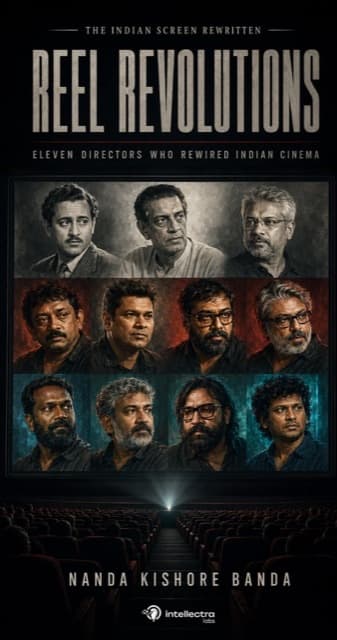
Eleven Directors Who Rewired Indian Cinema
Indian cinema did not evolve gently—it was repeatedly rewired by filmmakers willing to break its visual, emotional and commercial rules. Reel Revolutions examines eleven directors who changed what Indian films could see, say and become.
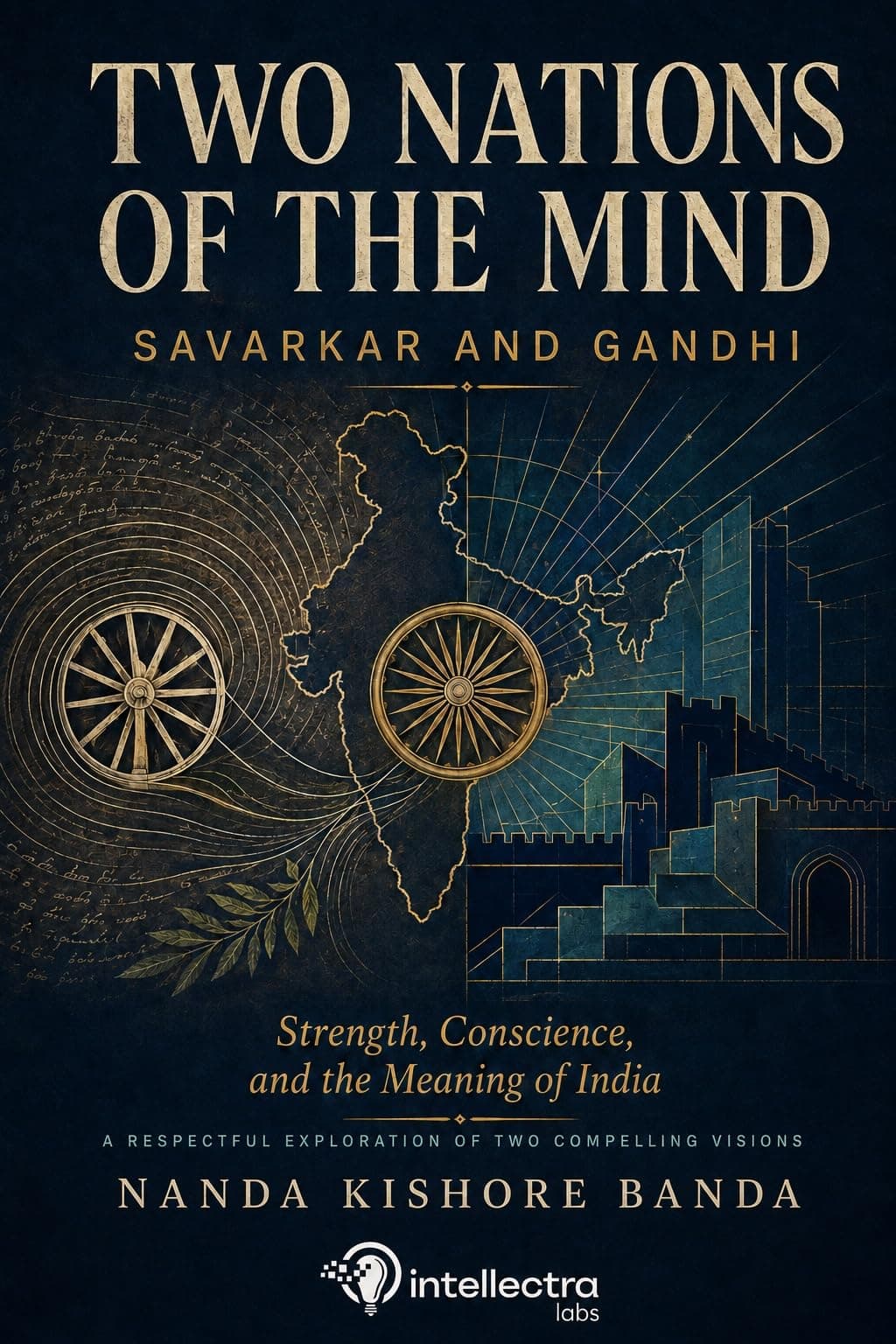
Savarkar and Gandhi — Strength, Conscience, and the Meaning of India
Savarkar and Gandhi imagined strength, freedom and India through radically different moral worlds. This balanced intellectual confrontation examines two compelling visions without reducing either thinker to a slogan, saint or villain.

The Khasi Woman Who Turned Water into Resistance
History remembers armies and treaties more readily than the woman who turned an ordinary act into resistance. Set in the Khasi Hills, this historical novel recovers Ka Phan Nonglait's courage from the margins of colonial memory.
Purchase on Amazon or explore more titles across the five libraries.